Robinhood2026-10-20 05:46:11GIGATENEV jumps 17x after Robinhood CEO Vlad Tenev follows its X accountChainCatcher reported that Robinhood CEO Vlad Tenev followed the X account of meme coin Giga Tenev, a move that appeared to coincide with a sharp price spike in GIGATENEV. According to GMGN market data cited in the report, the token surged 17x in a short period, pushing its market capitalization to $5.26 million. The report also flagged several risk factors around the token. It said GIGATENEV was not launched through a mainstream issuance platform, and earlier analysis had suggested that most purchases came from newly created wallets. ChainCatcher added that Tenev’s follow action itself may have come from a compromised account, meaning the signal behind the rally may not be reliable. With those factors in play, the report warned that the token may carry substantial risk and said users should remain cautious when investing.220
Bitcoin2026-10-19 06:55:13Analyst says Binance meme coins have seen more than $1.4 billion in cumulative sell pressure since Bitcoin’s peakAnalyst Darkfost said Bitcoin has recorded a maximum drawdown of 54% since reaching a high in October last year, with the asset now trading about 35% below that peak. Over the same period, cumulative sell pressure in the meme coin segment on Binance has exceeded $1.4 billion, making it one of the hardest-hit sectors in the current bear market. Darkfost said meme coins lack fundamental support and are driven mainly by market sentiment and cultural trends. He added that the sector’s share of total altcoin market capitalization has fallen to a record low of less than 3%, a sign that liquidity continues to leave the segment. In his view, meme coins tend to face heavier downside pressure during broader market corrections, and investors should stay alert to the risks tied to the category.310
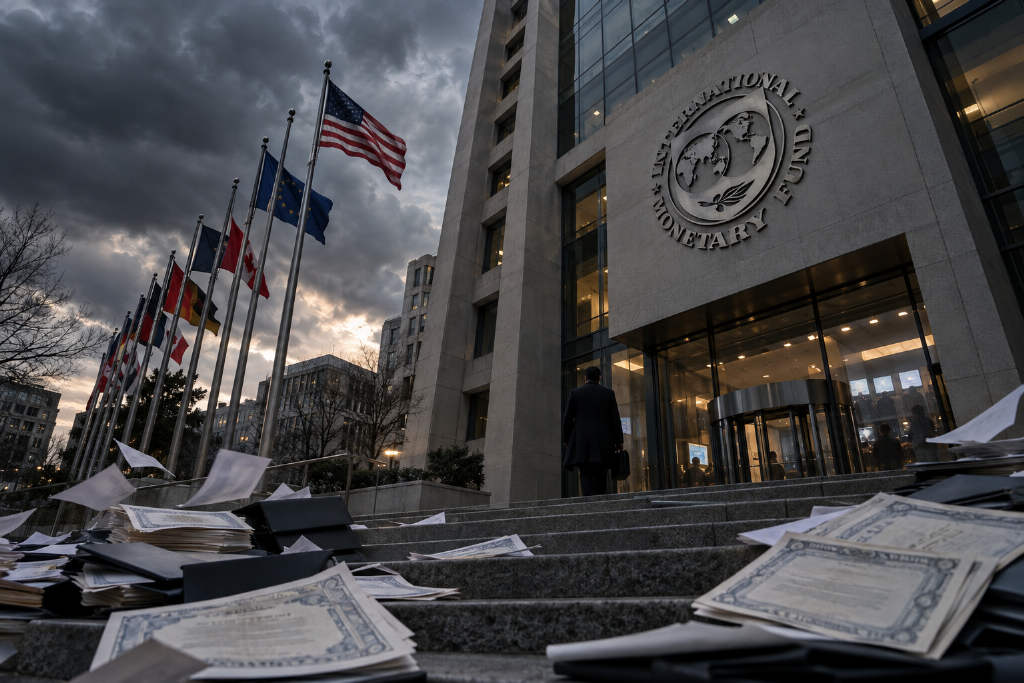
IMF2026-10-13 03:16:43IMF warns bond market risks have risen since April stability reportThe International Monetary Fund has warned that risks in the bond market have increased since its last stability report published in April, according to a brief update carried by ChainCatcher. The item did not include additional figures, a breakdown of which parts of the bond market were affected, or any quantified change in risk levels. The report was presented as a short market analysis update and attributed the warning directly to the IMF. No further timeline beyond the reference to the April report was provided in the source text, and no comments from specific officials were included. The original item also did not mention any direct link to crypto assets, policy responses, or market reactions.380
Bitcoin2026-10-10 11:40:10One year after the '10/11 crash,' analysts say leverage risk still hangs over cryptoOne year after the so-called "10/11 crash," analysts are revisiting what drove the sell-off and what it still says about crypto market structure. According to CoinDesk, Bitcoin fell from about $122,000 to $105,000 shortly after setting an all-time high near $126,000, triggering roughly $19 billion in liquidations across the crypto market. Mark Connors, head of Risk Dimensions, said the top formed very quickly as open interest approached historic highs and many traders were positioned for Bitcoin to continue its four-year cycle rally. In his view, the crash was driven mainly by derivatives rather than changes in on-chain demand, showing that leveraged positioning can still dominate Bitcoin's short-term price action. Connors added that perpetual futures and other leveraged products remain widely used, leaving the market exposed to another similar washout. Chris Sullivan, co-founder of Hyperion Decimus, said traders should reduce leverage and watch indicators such as open interest, funding rates, and market sentiment to spot crowded one-way positioning. Connors also said the predictive value of Bitcoin's four-year cycle is weakening, while macroeconomic and political factors may carry more weight.460
Bitcoin2026-10-10 11:52:58One Year After the '1011 Crash,' Analysts Say the Same Structural Risks Remain in CryptoA year after the "1011 crash" wiped out roughly $19 billion in leveraged crypto positions, analysts say the conditions behind that sharp sell-off have not gone away, according to CoinDesk. The report revisits the October 2025 drop, when Bitcoin fell from around $122,000 to $105,000 shortly after setting a record above $126,000, triggering a wave of long liquidations. Mark Connors, an analyst at Risk Dimensions, said recent short-term price action is still being driven largely by derivatives such as perpetual futures rather than on-chain data. He also said exchanges' continued tilt toward high-leverage products means the risk of another sudden breakdown has not been removed. Connors added that the traditional four-year halving cycle has changed, with macroeconomic and political forces now carrying more weight. Chris Sullivan, co-founder of Hyperion Decimus, said traders should avoid excessive leverage and keep a close watch on open interest, funding rates, and market sentiment indicators. For long-term investors, he recommended moving assets off exchanges and into self-custody.510
Bitcoin2026-10-10 11:05:00One year after the "1011 crash," leverage risk still hangs over crypto marketsA year after the so-called "1011 crash," the leverage and crowded positioning that helped drive that selloff may still be present in crypto markets, according to a CoinDesk report cited by PANews. During the October 2025 plunge, Bitcoin hit a record high of about $126,000 and then quickly slid from roughly $122,000 to $105,000, triggering around $19 billion in liquidations across the crypto market. Mark Connors, head of Risk Dimensions, said the market topped out unusually fast as open interest approached record levels and many traders were betting that Bitcoin would continue rising under its four-year cycle narrative. He said the selloff was driven mainly by derivatives rather than changes in on-chain demand, showing that leveraged positions can still dominate Bitcoin's short-term price action. Connors added that perpetual futures and other leveraged products have not gone away, leaving room for a similar event to happen again. Chris Sullivan, co-founder of Hyperion Decimus, said traders should cut leverage and watch indicators such as open interest, funding rates and market sentiment for signs of overly one-sided positioning. Connors also said investors have improved their understanding of market structure, while the usefulness of Bitcoin's four-year cycle as a pricing guide is fading and macroeconomic and political factors may matter more.410
BTC2026-09-03 14:00:26Coinglass: BTC Liquidation Thresholds at $74,860 and $82,084According to Coinglass data, if Bitcoin drops below $74,860, the cumulative long liquidation intensity on major centralized exchanges could reach $1.724 billion; conversely, if BTC breaks above $82,084, the short liquidation intensity would be $832 million.460
ESMA2026-10-01 05:35:41ESMA flags crypto market fragility in its second risk monitoring report for 2026The European Securities and Markets Authority on Thursday released its second risk monitoring report for 2026, outlining the main risks and vulnerabilities facing European Union financial markets. The watchdog said markets have remained resilient, but that resilience is being tested by persistent inflation, weak economic growth, elevated technology valuations, and rising geopolitical tensions. Beyond listed markets, ESMA said investors should also watch other pockets of risk, including exposure to private credit tied to the U.S. market and the growing links between crypto-asset markets and the broader financial system. The report described the crypto market as increasingly fragile. ESMA Chair Verena Ross said investor optimism continues to support high valuations, but warned that the wider the gap becomes, the greater the risk of a sudden market correction. The report also examined selected themes including trends in U.S. technology IPOs and prediction markets.760